
The Rise of Fiber-Optic Drones
The Rise of Fiber-Optic Drones
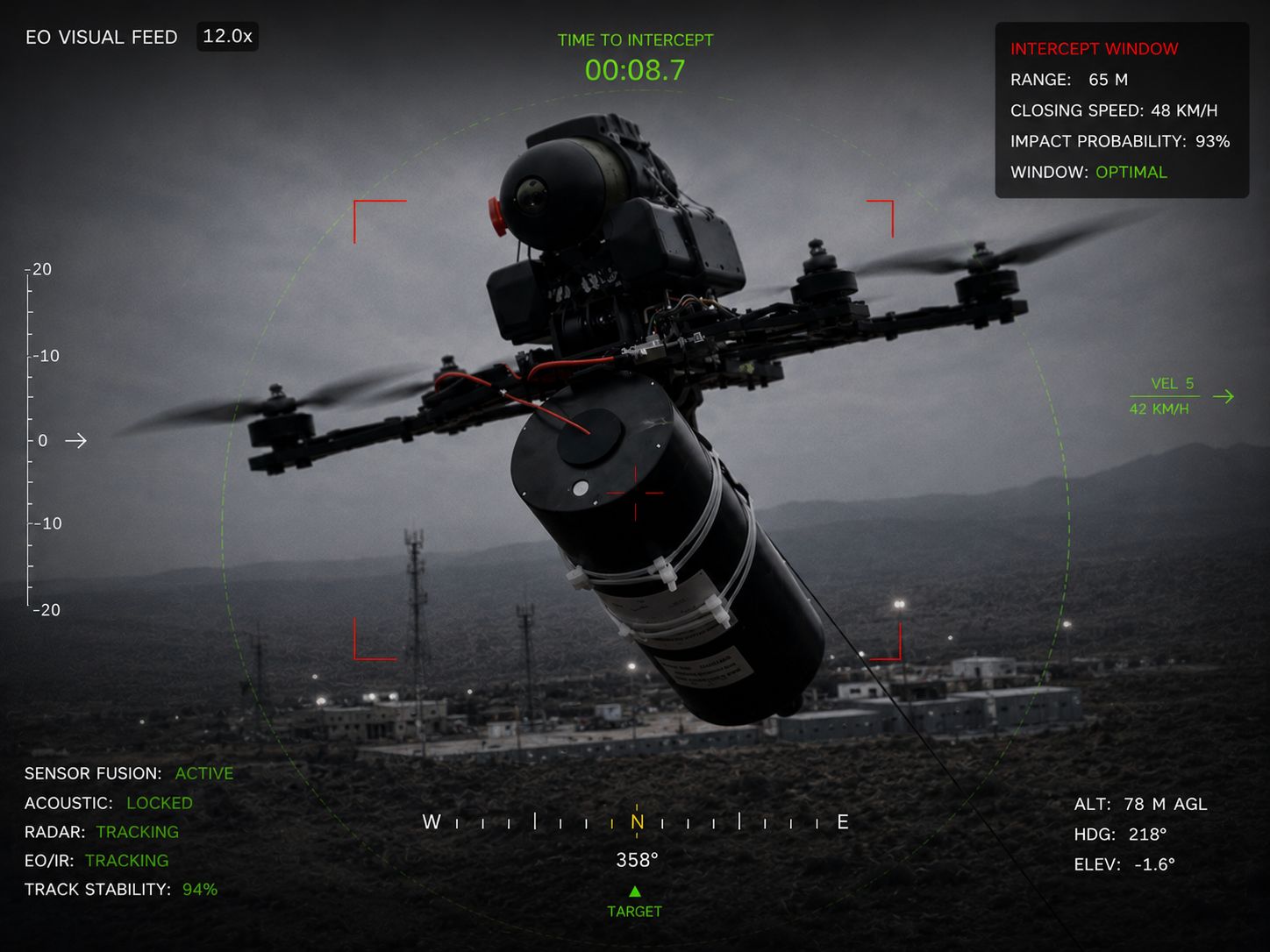
Fiber-optic drones are rapidly emerging as one of the most significant challenges in modern airspace security. Unlike traditional drones that rely on radio-frequency (RF) communications, these systems are connected to the operator through a physical fiber-optic cable, making them highly resistant to conventional electronic warfare techniques.
Because they do not depend on RF links, fiber-optic drones can often operate in environments where GPS jamming, RF disruption, or signal interception would normally be effective. This creates a new threat profile for military forces, critical infrastructure operators, and security organizations worldwide.
As these platforms become more common, organizations can no longer rely solely on RF-based detection and mitigation solutions. Effective protection requires a layered Counter-UAS approach that combines radar, electro-optical sensors, acoustic detection, artificial intelligence, and advanced tracking capabilities.
The evolution of drone technology continues to reshape the security landscape. Understanding emerging threats such as fiber-optic drones is essential for building resilient defense strategies and ensuring the protection of critical assets.
The future of Counter-UAS is not about defeating yesterday’s drones—it is about preparing for tomorrow’s threats.


